
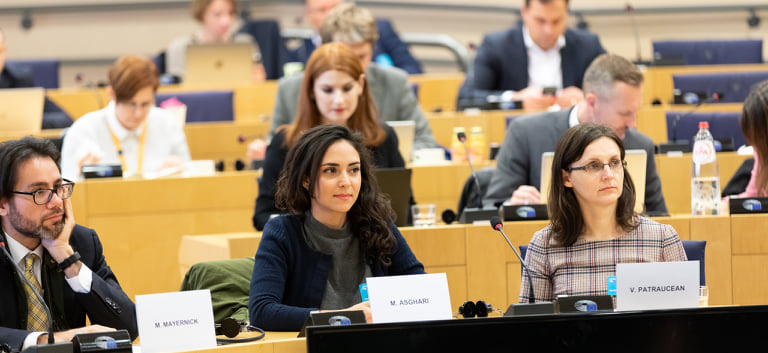
Statement on AI, Trust, and Democratic Institutions
Delivered to the European Parliment, November 20, 2019
Today, I am interested in a simple question at the heart of all the other questions that have been raised: do we have the public institutions we need to meet all the challenege of an AI driven future?
The world is becoming increasingly complicated and interconnected. As a consequence, the decisions of governments, corporations, and large institutions have become less accessible to the average citizen. Whether in relation to globalization, climate change, or automation, citizens are being asked to accept decisions made by experts - or forces - that feel entirely beyond their control.
The result has been a collapse of public trust and surging nationalist movements in Western Democracites. Complexity is creating a political alienation and a sense of powerlessness among the governed.
But as much as the average citizen may resist giving up political authority to a panel of climate scientists, or the market forces of globalization, how will they react to healthcare decisions being made by AI algorithms, or factories closing based on computer simulations?
What new policy-making tools could reinnovigorate public involvment and trust in the complex decisions of the future? What would it mean to be entrepreneurial in how to establish social cohesion and pride in public institutions?
The honorable MP asked what is human centric design? I share his question, but let me take a crack at it: human centric design for AI means more than answering policy questions. Instead, it means creating vibrant, inclusive feedback loops in which public input is seen as constituitive to the system itself from the start - that is, a kind of continuous public inteligence in which all citizens are recognized as co-creating our future social orders.
Specificly, such a framework will require four elements:
- a standard way to describe the various AI related questions and consequences to average people - we have enviormental impact studies, what would sociotechnological impact studies look like?
- oppotunity to for citizens to provide input on the various outcomes of the application of AI and ensure public accountability
- the development of a rights framework to establish boundaries and limits for any autonomous systems
- dedicated political bodies that have the expertise and trust to advise the public on such questions
The challenges of AI present an opportunity to rethink and reinvigorate the way democracies function if we can match the technology innovation with commensurate social innovation.